
The recognition of prior learning assessment is a formal process used in Australia to evaluate a person’s existing skills, knowledge, and work experience against nationally recognised qualifications. Instead of studying a course from the beginning, individuals can gain qualifications based on what they already know and can demonstrate.
This system is widely used in Australia’s vocational education and training (VET) sector. It is especially important for skilled workers who have years of experience in industries such as construction, business management, hospitality, electrical work, plumbing, and project management but do not hold formal Australian qualifications.
The recognition of prior learning Australia assessment is designed to ensure that experience gained in workplaces, overseas jobs, or informal training is properly recognised. It supports workers in converting their practical knowledge into formal qualifications such as Certificate III, Certificate IV, or diploma-level certifications.
At its core, the process is about evidence. Candidates must show proof of their skills through work records, references, portfolios, and sometimes practical demonstrations. This makes the RPL competency assessment both practical and evidence-based.
In Australia, many people use this pathway to upgrade their career prospects, meet licensing requirements, or transition into better job roles. For example, a construction worker with 10 years of experience may apply for a trade skills recognition assessment to obtain a formal qualification without repeating training they already know.
Overall, RPL is a structured way of acknowledging that learning does not only happen in classrooms but also through real-world experience.
Why Recognition of Prior Learning Assessment is Growing in Australia?
The demand for recognition of prior learning assessment in Australia has increased significantly due to workforce shortages and the need for faster qualification pathways.
Industries such as construction, business management, and project management rely heavily on experienced workers who may not hold formal Australian qualifications but possess strong practical skills.
RPL helps bridge this gap by converting experience into nationally recognised certifications under the Australian Qualifications Framework (AQF).
This makes it an efficient solution for both employers and employees in a competitive job market.
How Does Recognition of Prior Learning Assessment Work?
To understand how does recognition of prior learning assessment work, it is important to know that the process is competency-based rather than study-based. This means assessors focus on what you can do, not just what you have studied.
The RPL assessment process typically begins when an applicant contacts a Registered Training Organisation (RTO) in Australia. The RTO provides a skills recognition assessment Australia framework aligned with national qualification standards.
Once you apply, an assessor compares your prior experience with the qualification requirements. This process is known as qualification mapping against experience. It determines whether your existing skills match the units of competency required for a certificate or diploma.
During the prior learning evaluation Australia process, you will be asked to provide evidence such as job descriptions, reference letters, project reports, or photos of completed work. This is called evidence collection for RPL assessment.
In many cases, applicants also go through an interview or practical demonstration. This helps assessors confirm your abilities in real-world scenarios.
The recognition of prior skills Australia process is flexible and tailored. For example, someone applying for a Certificate III in Carpentry will have their construction skills assessed differently from someone applying for a Diploma in Business Management.
Once all evidence is reviewed, the assessor decides whether you meet full competency, partial competency (requiring gap training), or non-competency.
This structured method ensures fairness and consistency while recognising real industry experience.

Step-by-Step RPL Assessment Process Explained?
The RPL assessment process step by step follows a structured pathway designed to evaluate experience fairly and consistently.
- The first step is initial consultation. Here, the applicant discusses their work history with an RTO to determine RPL eligibility assessment. This helps identify which qualification best matches their skills.
- The second step is enrolment in the recognition of prior learning application process. Once enrolled, the candidate receives guidance on required evidence.
- The third step involves evidence collection for RPL assessment. Applicants gather documents such as employment records, payslips, project summaries, and references. This stage is critical for building a strong application.
- The fourth step is competency mapping process RPL. Assessors compare collected evidence against qualification standards to identify gaps or matched competencies.
- The fifth step includes portfolio submission for RPL. This portfolio contains all structured evidence arranged according to unit requirements.
- The sixth step is interview and practical assessment RPL. In this stage, assessors may ask questions or observe practical tasks to confirm skill levels.
- The seventh step is workplace evidence evaluation RPL, where assessors validate real-world performance through employer verification or project proof.
Finally, the RTO issues results. If successful, candidates receive nationally recognised qualifications such as Certificate III, IV, or diploma certifications.
This formal RPL process ensures that experience is properly measured and credited in Australia’s education system.
RPL Assessment Requirements in Australia
The recognition of prior learning assessment Australia requirements vary depending on the qualification level and industry. However, most RPL applications follow similar eligibility standards.
Applicants must demonstrate relevant work experience in the industry they are applying for. For example, RPL assessment for experienced workers Australia typically requires at least 2–5 years of documented experience.
Another key requirement is proof of competency. This includes work samples, job references, performance records, or employer statements.
Identity documents such as passports or national ID cards are also required for verification.
Some qualifications may require additional proof such as licences, safety training certificates, or technical documentation.
For trade skills recognition assessment, applicants often need to show hands-on experience in real work environments such as construction sites, workshops, or maintenance roles.
In diploma or higher-level qualifications, such as project management RPL assessment or business management RPL evaluation, candidates must demonstrate leadership, planning, and decision-making experience.
Meeting these requirements ensures that applicants are eligible for formal assessment under the vocational education RPL assessment system in Australia, often more important than formal education in the assessment process.
Documents Needed for RPL Assessment (Evidence Collection Guide)
The RPL assessment documents needed depend on the qualification, but generally include a combination of formal and informal evidence.
- Work experience letters from employers are one of the most important documents. These letters should describe job roles, responsibilities, and duration of employment.
- Payslips or tax records may also be used to verify employment history.
- A key part of evidence collection for RPL assessment is portfolio submission. This includes photos of completed work, project reports, case studies, or task summaries.
- In technical fields like construction RPL assessment Australia or electrical trades, safety certificates and site logs may also be required.
- For business-related qualifications, documents such as reports, presentations, or project plans are commonly submitted.
- Some applicants also include training records from workshops or informal courses.
- All documents are reviewed as part of RPL evidence assessment to ensure authenticity and relevance.
A strong and well-organised portfolio increases the chances of approval in the recognition of prior learning application process.
Top Project Management Evidence for RPL Assessment (Checklist)
For candidates applying for a project management RPL assessment, the quality of evidence plays a major role in approval. Assessors focus on real-world proof of planning, leadership, and delivery experience rather than theoretical knowledge.
Below are the most valuable documents commonly used in successful RPL applications for project management qualifications:
1. Project Management Plans (PMP)
These demonstrate your ability to structure and manage full project lifecycles. They show how you planned scope, timelines, resources, and deliverables across projects.
2. Risk Registers
Risk documentation proves that you can identify, assess, and manage project risks effectively. This is a key competency in both Certificate IV and Diploma-level project management RPL assessment.
3. Meeting Minutes and Stakeholder Communication
Written records of meetings, emails, or communication logs demonstrate leadership, coordination, and stakeholder engagement skills – critical for RPL competency assessment.
4. Gantt Charts and Project Schedules
These documents provide clear evidence of planning and time management ability. They are especially important for qualification mapping against experience in formal RPL processes.
5. Budget Reports and Variance Analysis
Financial tracking documents such as budgets, forecasts, and variance reports show your ability to manage project costs and ensure delivery within financial constraints.
Together, these documents form the foundation of a strong RPL evidence assessment for project management candidates in Australia.

What is Included in RPL Skills Assessment?
The RPL skills assessment evaluates whether an individual has the required competencies for a specific qualification.
It includes theoretical knowledge assessment, where applicants explain their understanding of industry concepts.
It also includes practical skill assessment, which may involve demonstrating tasks or providing evidence of past work performance.
The assessment also includes workplace evidence evaluation RPL, where real-life job performance is analysed.
In many cases, an interview is conducted to verify experience and clarify responsibilities.
For qualifications like Certificate III or IV, the assessment focuses on technical skills, safety compliance, and task execution.
For diploma-level qualifications, leadership, planning, and decision-making abilities are also assessed.
The goal of what is included in RPL assessment is to ensure that all learning, formal or informal is properly recognised.
Competency Mapping Process in RPL Explained
The competency mapping process RPL is a structured method used to compare a candidate’s experience with national qualification standards.
Each qualification in Australia is broken down into units of competency. These units define the skills and knowledge required for a job role.
Assessors review the applicant’s experience and map it against each unit.
For example, in a Certificate IV qualification, one unit may require project planning skills. The assessor checks whether the applicant has demonstrated this through past work.
If evidence fully meets requirements, competency is granted. If gaps exist, additional training may be recommended.
This process ensures accuracy in qualification mapping against experience and maintains national standards.
Competency mapping is one of the most important steps in the formal RPL process because it determines final eligibility.
Portfolio Submission for RPL Assessment
Portfolio submission for RPL is the stage where applicants compile all their evidence into a structured format.
The portfolio includes work samples, references, certificates, and supporting documents.
Each document must be linked to specific units of competency.
This helps assessors evaluate the applicant efficiently during the RPL assessment process.
A well-prepared portfolio shows clear evidence of skills, making approval more likely.
In many cases, RTOs provide templates to guide applicants in organising their portfolio.
Strong portfolio preparation is essential for success in the recognition of prior learning assessment.

Interview and Practical Assessment in RPL Process
The interview and practical assessment RPL stage is used to validate the evidence submitted.
During interviews, assessors ask questions about job roles, responsibilities, and technical knowledge.
Practical assessments may involve demonstrating specific tasks related to the qualification.
For example, in trade skills recognition assessment, applicants may be asked to perform technical tasks in a controlled environment.
This step ensures that skills are not only documented but also practically demonstrated.
It is an important part of the RPL competency assessment process.
Example Questions You May Be Asked
To help applicants prepare, here are common types of questions used during an RPL interview:
- How do you ensure compliance with workplace safety requirements?
- Can you describe a project where you were responsible for managing timelines and deadlines?
- How did you handle a situation where a project exceeded its budget?
- What steps did you take to manage risk on a recent project?
- Can you walk me through how you coordinated communication between stakeholders?
- Describe a time when a project did not go as planned. What was your response?
- What tools or systems did you use to manage project schedules or resources?
Who Conducts Recognition of Prior Learning Assessment
The recognition of prior learning assessment is conducted by Registered Training Organisations (RTOs) in Australia.
These organisations are accredited under the Australian Skills Quality Authority (ASQA).
Qualified assessors with industry experience review applications.
They ensure compliance with national standards and perform skills recognition assessment Australia processes.
Only authorised RTOs can issue nationally recognised qualifications after RPL approval.
RPL Assessment for Trade Qualifications (Construction, Electrical, Plumbing)
RPL assessment for trade qualifications Australia is highly common in industries like construction, electrical work, and plumbing.
Skilled workers in these industries often have years of experience but lack formal certification.
The construction RPL assessment Australia process evaluates hands-on skills such as site work, installation, and maintenance.
Electrical RPL includes wiring, safety compliance, and system installation knowledge.
Plumbing RPL focuses on pipe systems, repair work, and compliance with regulations.
Trade assessments rely heavily on workplace evidence evaluation RPL and practical demonstrations.
RPL Assessment for Certificate III, IV, and Diplomas
The RPL assessment for Certificate III is focused on basic to intermediate job skills.
Certificate IV RPL assessment includes supervisory and technical responsibilities.
Diploma RPL assessment process evaluates advanced skills such as leadership, project management, and decision-making.
Each level has different competency requirements aligned with national qualification frameworks.
These qualifications help workers upgrade careers without starting formal education from scratch.

How Long Does RPL Assessment Take in Australia
The duration of the recognition of prior learning assessment varies depending on the qualification level, industry, and completeness of evidence provided.
While the formal RTO assessment and verification process may take 4 to 12 weeks for complex qualifications such as trade licenses or diploma-level certifications, the actual preparation stage is often much faster.
For example, most project management RPL assessment candidates can complete their evidence collection and portfolio preparation within 2 to 4 weeks, especially if they already have structured project documentation available.
Delays usually occur when:
- Evidence is incomplete or missing
- Employer verification takes time
- Additional clarification is required from the assessor
In well-prepared cases, the formal RPL process can move quickly because assessors only need to verify existing competencies rather than conduct full training.
This makes RPL one of the fastest pathways to gaining formal Australian qualifications compared to traditional study programs.
How to Prepare for Recognition of Prior Learning Assessment
To understand how to prepare for RPL assessment, applicants should first gather all relevant work experience documents.
Seeking guidance from an RTO improves success chances.
They should clearly document job roles and achievements.
Organising a strong portfolio is essential.
Understanding qualification requirements helps in matching experience correctly.
Benefits of RPL Assessment for Experienced Workers
The benefits of RPL assessment include saving time, reducing study costs, and gaining formal recognition.
- Experienced workers can convert skills into qualifications quickly.
- It improves job opportunities and career growth.
- RPL also supports licensing requirements in many industries.
Comparison Table: Traditional Study vs RPL Pathway
| Feature | Traditional Study (Uni/TAFE) | RPL Pathway |
| Timeframe | 6 months – 2 years | 2 – 8 weeks |
| Evidence Type | Exams, essays, assignments | Real-world project documents |
| Learning Method | Classroom or structured online study | Experience-based assessment |
| Location | Campus or fixed schedules | Fully remote / work-based |
| Flexibility | Fixed timetable and attendance | Flexible, self-paced |
| Cost | $5,000 – $15,000+ | $1,500 – $5,000 |
| Entry Requirement | Academic prerequisites | Work experience |
| Assessment Style | Theoretical exams | Practical competency evaluation |
| Outcome | Graduate certificate/diploma | Same nationally recognised qualification |
| Best For | New learners | Experienced professionals |
Career Opportunities After RPL Project Management Qualification
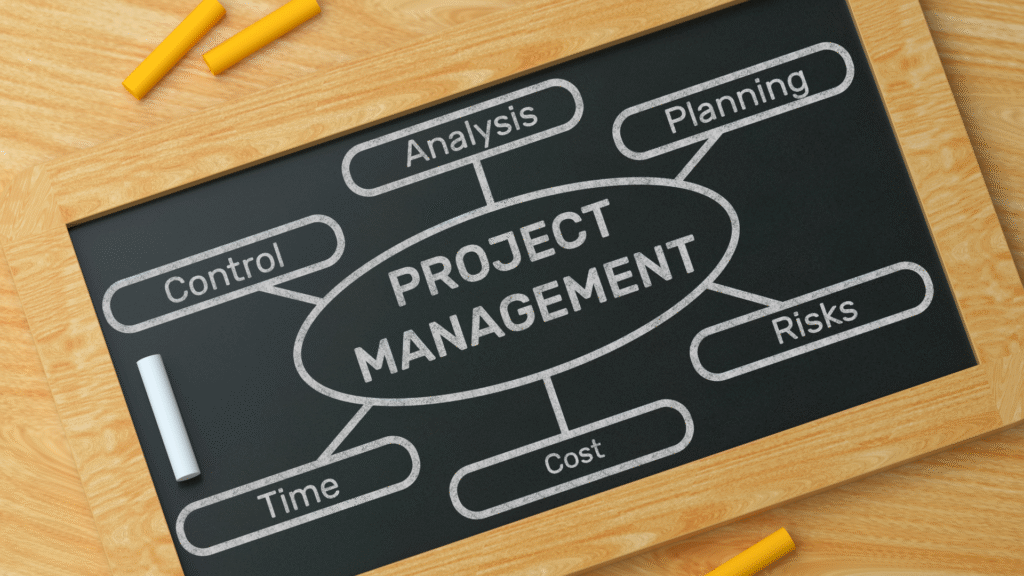
The Australian job market in 2026 is experiencing strong demand for qualified project management professionals across multiple industries. With ongoing government infrastructure investments, housing development projects, renewable energy expansion, and digital transformation programs, the need for skilled project managers is steadily increasing.
A rpl project management qualification is now one of the fastest pathways for experienced workers to formalise their skills and access higher-level roles without completing years of traditional study.
Unlike entry-level qualifications, RPL-based certifications focus on real-world experience, making them highly relevant in industries where practical knowledge is valued over academic theory.
Is RPL Assessment Tax Deductible in Australia?
In many cases, the cost of a recognition of prior learning assessment may be tax deductible in Australia if it is directly related to your current employment or career advancement.
If the qualification helps you:
- Maintain your current job role
- Improve your skills in your existing industry
- Increase your income within your current profession
then it may be considered a work-related self-education expense under Australian tax guidelines.
For example, a construction supervisor completing a Certificate IV through RPL assessment or a project manager upgrading to a diploma-level qualification may be eligible to claim certain costs.
However, eligibility depends on individual circumstances and Australian Taxation Office (ATO) rules. It is always recommended to consult a registered tax professional for accurate advice.
This makes RPL not only a faster qualification pathway but also a potentially cost-efficient one for experienced professionals.
RPL Eligibility Assessment and Approval Process
The RPL eligibility assessment determines whether an applicant qualifies for RPL.
Approval depends on experience, documentation, and competency level.
Once approved, candidates proceed to full assessment.
Common Mistakes in RPL Application Process
Common mistakes include incomplete documentation, poor portfolio structure, and lack of evidence.
Many applicants underestimate the importance of detailed work proof.
Failing to match experience with competencies is another issue.
Proper preparation helps avoid rejection.
FAQs
How does recognition of prior learning assessment work?
It evaluates your existing skills and experience against national qualification standards. Evidence is reviewed through documents, interviews, and sometimes practical demonstrations.
What is included in RPL assessment?
It includes evidence review, competency mapping, interviews, and practical assessments to confirm your skills match qualification requirements.
How to prepare for RPL assessment?
Gather work experience documents, build a structured portfolio, and ensure your experience matches the qualification units.
How long does RPL assessment take in Australia?
It usually takes 4 to 12 weeks depending on document readiness and qualification complexity.
Who conducts RPL assessment?
Registered Training Organisations (RTOs) conduct assessments through qualified industry assessors.
What documents are needed for RPL assessment?
Employment letters, payslips, work samples, certificates, references, and identity documents are commonly required.
Is RPL assessment difficult?
It is not difficult if you have relevant experience and proper documentation, but preparation is essential.
Can RPL replace study in Australia?
Yes, RPL can replace formal study if your experience fully meets qualification requirements.
Is RPL useful for trade qualifications?
Yes, especially in construction, electrical, and plumbing industries where hands-on experience is valuable.
What is recognition of prior learning assessment in simple terms?
It is a process that turns your work experience into a formal qualification.
Do I need study for RPL?
No full study is required, but some gap training may be needed if competencies are missing.
Can overseas experience be used for RPL?
Yes, if properly documented and relevant to Australian standards.
What industries use RPL in Australia?
Construction, business, healthcare, IT, project management, and hospitality commonly use RPL.
What is the cost of RPL assessment?
Costs vary depending on qualification level and RTO, typically ranging from moderate to high depending on complexity.
Is RPL faster than studying?
Yes, RPL is usually faster because it assesses existing experience instead of teaching from scratch.